The world’s least successful fort?
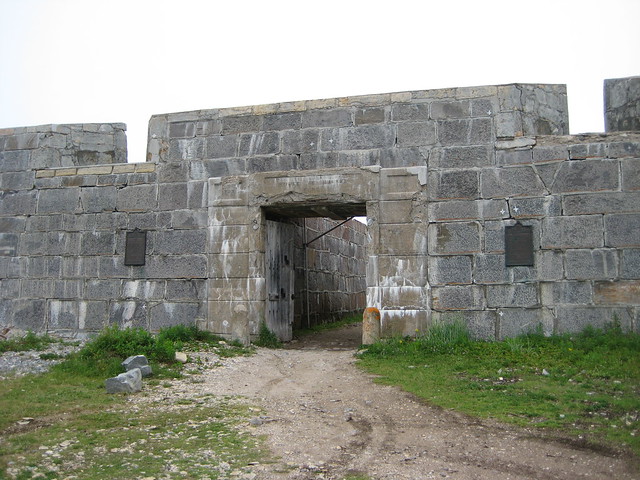
Prince of Wales Fort, Canada. Probably the world’s least successful fort.
When I went polar bear watching in Canada a few years back, I visited what must be a very strong contender for the world’s least successful military fort. Were it not so far out of the way, I suspect it would be a staple venue for YouTubers like Tom Scott. But it’s really out of the way.
Construction of the Prince of Wales Fort, at the mouth of the Churchill River on the Hudson Bay in Canada, started in 1731 (probably; though the plaque on it says 1733), to replace a previous wooden affair. The inhospitable and far-flung location meant construction went not only slowly but really slowing. It was not until 1772 that it was completed, 41 years on.
It was meant to be a modern design displaying the very latest in fortification knowledge, but it was a design that was badly flawed as was discovered when a cannon was test fired for the first time on site. The recoil on the cannon was greater than the width of the wall, meaning that each time a cannon would be fired there would be a big risk of it recoiling back and falling off the inside edge of the wall on which it was positioned. Appropriate for Carry On Up A Fortress perhaps, but not very practical. As a result, the walls had to be nearly doubled in width during the construction.
A decade after it was finished, the fort went into action for the first time.
A French expedition under Admiral Jean-Francois Galaup* arrived, finding the fort without any soldiers and only 39 civilians. The absence of soldiers was not completely surprising as the fort had been a private construction by the Hudson Bay Company.
Even so with a mere 39 people to try to defend the fort against the French ships their commander, Samuel Hearne, wisely decided to surrender without a shot being fired.
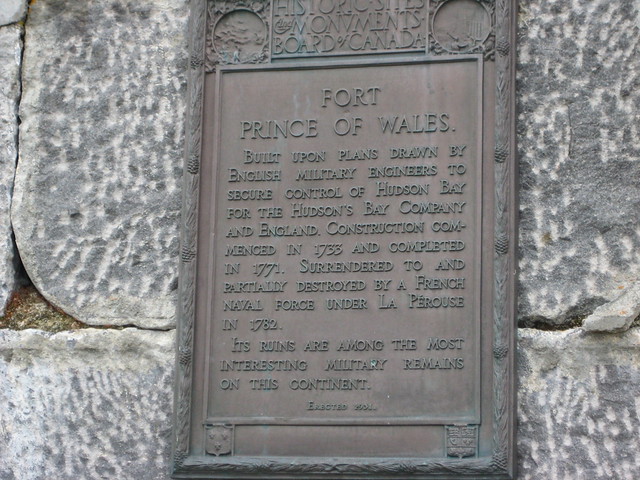
Forty years in the making and handed over without a shot being required; the world’s least successful fort?
* Galaup is himself a fascinating character, with a welcome streak of humanity during this campaign and a remarkable career taking him around the world.
Hi Mark, have you paused to consider the Fort might have been a big success?
In the Art of War, it seems to me the Fort was an outstanding success.
For decades it served as an effective deterrent to the French and local tribes without the need to fire a shot. It was a private company that built it at their own expense to control the lucrative fur trade. In reality an armed trading post. In the end the mere existance of a DIY fort forced the French to send a French Fleet to go all the way to Hudson Bay to force the surrender of a trading post which had no soldiers! And by tying down a French Fleet for months on an expensive and vulnerable supply chain, preventing that Fleet from attacking more strategic places. Cheers, Robin
Hah, that’s a very good way of looking at it!